Live JSX Renderer
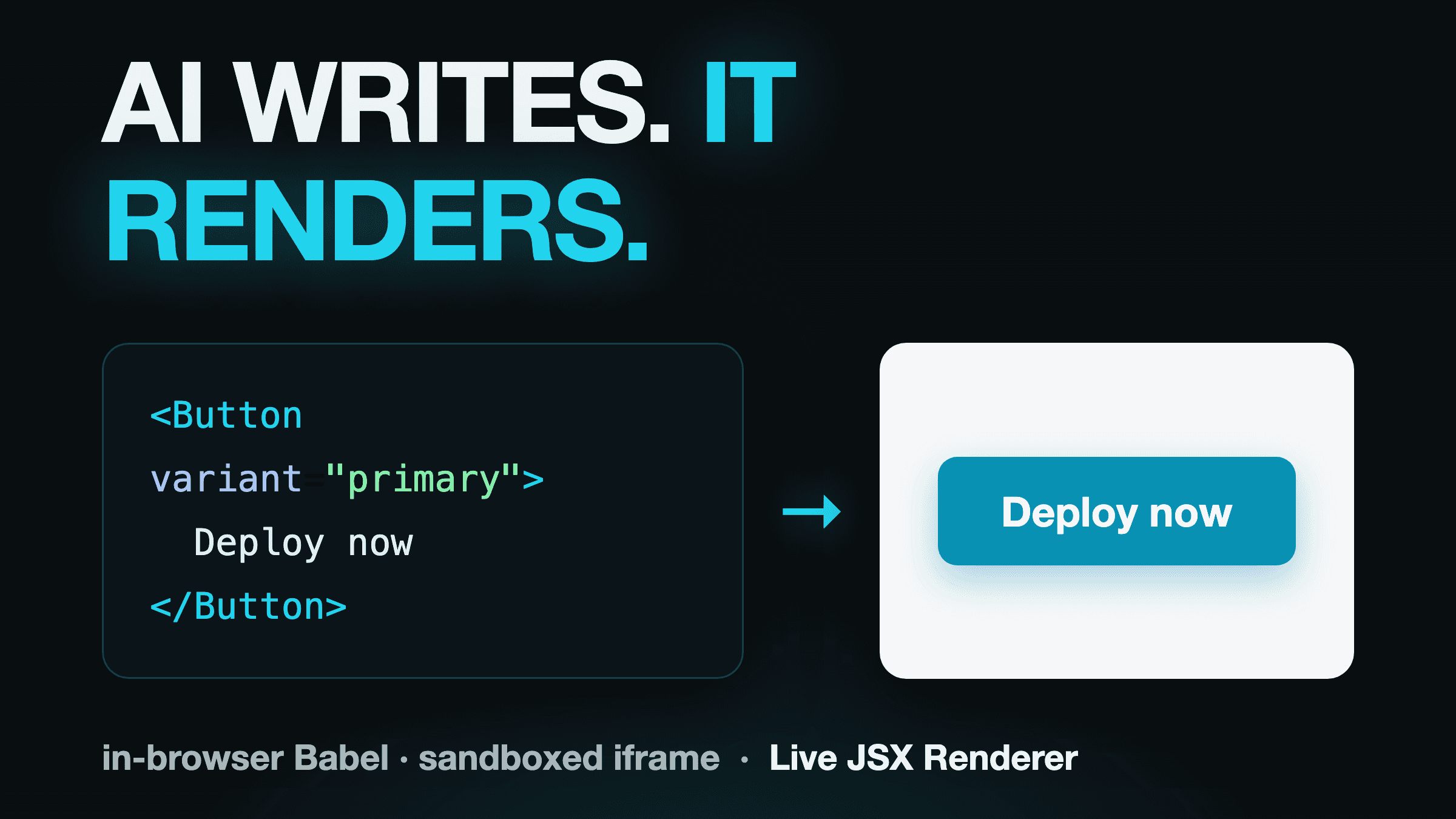
Browser sandbox that renders LLM-generated JSX in real time — Monaco editor, in-browser Babel transpilation, and a locked-down iframe so untrusted AI output can't touch the host page. Shareable playground links.
Why I built it
LLMs are good at writing React components — but the loop of "copy the code, paste it into a project, wait for the dev server" kills the magic. I wanted the ChatGPT-to-pixels time to be zero: paste (or stream) JSX in, see it render live, share a link.
How it works
Three moving parts, all in the browser — there is no server-side rendering step at all:
- Monaco editor (the VS Code editor as a component) for editing with syntax highlighting and TypeScript awareness.
- In-browser Babel transpiles the JSX to plain JavaScript on every change — no server round-trip, which is what makes the feedback loop feel instant.
- A sandboxed iframe executes the result. This is the load-bearing decision: the code being rendered is untrusted (it came from an AI, or from whoever shared the link), so it runs inside an iframe with a restrictive
sandboxattribute — its own origin, no access to the parent page, no top-level navigation. The worst a malicious snippet can do is break its own little box.
Playgrounds serialize into shareable URLs, so a working component can be passed around like a screenshot — except it's alive.
Build notes
React + Vite for the shell, Babel standalone for transpilation, and a message-passing bridge between the editor page and the sandbox iframe (postMessage both ways: code goes in, errors and console output come back).
What I learned
Executing untrusted code in a browser is a genuinely sharp problem — the iframe sandbox attribute, origin isolation, and the "what could a hostile snippet do?" threat-model exercise were the real education here. It also planted the seed for how I think about AI-generated code generally: trust the output visually, never trust it with your page.