mn CLI
Terminal-native notes and command manager — save a gnarly command once, find it with keyword search, and re-run it instantly. Folder-scoped organization, with git-backed sync across machines.
Why I built it
Every developer has a graveyard of commands they've solved before — that one ffmpeg incantation, the exact docker compose flags for a project, the deploy command with the right env vars. They live in shell history until they don't, or in a notes app you never open while working. mn keeps them where you actually are: the terminal.
What it does
$ mn save deploy "vercel --prod"     # save it once
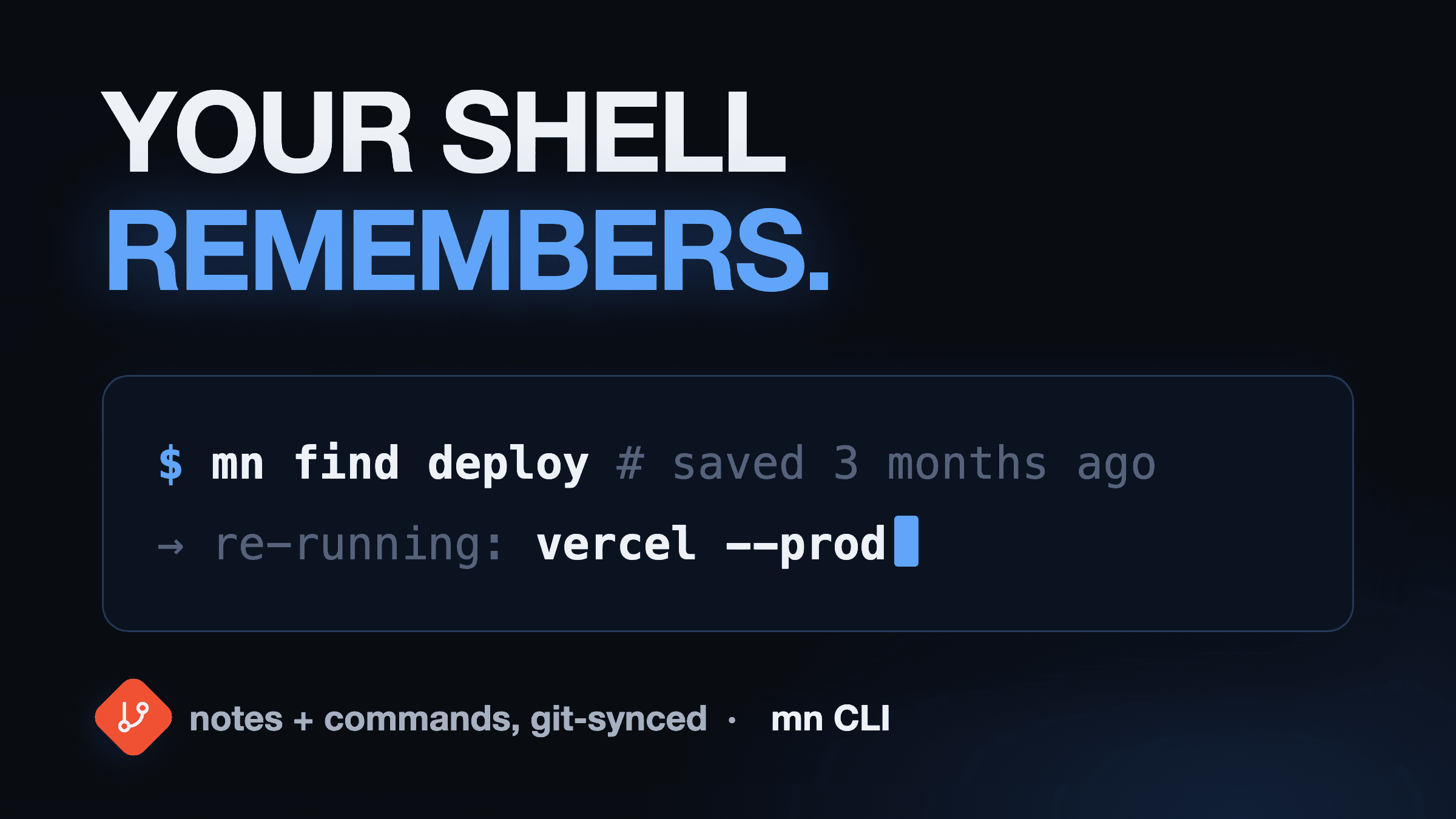
$ mn find deploy                     # fuzzy-find it months later
$ mn run deploy # re-run it without retyping- Notes and commands, folder-scoped —
work/,infra/,home/keep contexts separate, sodeploycan mean different things in different scopes. - Keyword search across everything — an interactive picker (Inquirer) lists matches with previews; pick one to run or edit.
- Instant re-execution — saved commands run in your current shell context, so the loop is search → enter → done.
- Git-backed sync — the store is a plain folder of files under git;
mn syncpushes it, so every machine has the same brain.
Build notes
TypeScript with Commander for the command surface and Inquirer for the interactive picker. Storing notes as plain files (not a database) was deliberate: it makes git the sync engine for free, keeps everything greppable outside the tool, and means losing the tool never means losing the data.
What I learned
CLI UX is real UX — flag naming, output brevity, and interactive-vs-scriptable modes are product decisions. And distribution via npm (npm i -g) taught me the practical side of packaging: bin entries, shebangs, and making a Node CLI start fast enough to not feel like a Node CLI.